Williams SonomaCookware
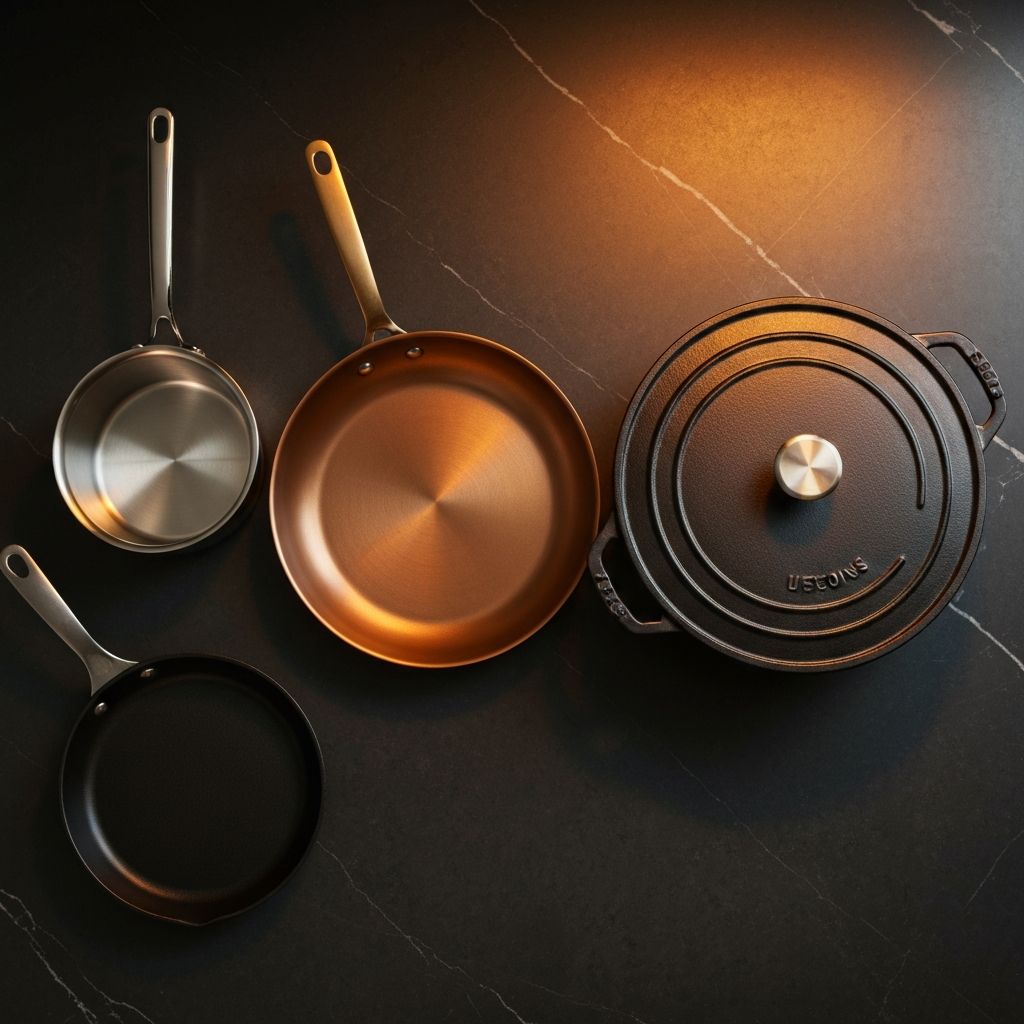
Four premium cookware types side by side — stainless, copper, cast iron, nonstick

The Definitive Guide

Williams Sonoma Cookware
Comparison Guide

Stainless vs. copper vs. cast iron. Thermo-Clad vs. All-Clad D5. 3-ply vs. 5-ply construction. This guide answers every question so you invest in the right cookware the first time.

Shop on Amazon

Chapter 1

Material Breakdown

Every cookware material has a unique thermal profile, surface chemistry, and maintenance rhythm. Understanding these four fundamental materials is the foundation of every smart cookware purchase. No single material wins in every category — the right choice depends entirely on how and what you cook.

Stainless Steel

The All-Around Workhorse

Induction

Yes

Dishwasher

Yes

Durability

Exceptional

Reactivity

Non-reactive

Best For

Searing, browning, deglazing, everyday cooking

Stainless is the gold standard for serious home cooks. The key is the interior construction — look for a fully-clad tri-ply or 5-ply design so heat spreads from the base up through the walls. Williams Sonoma's exclusive Thermo-Clad is crafted in Italy with a thick aluminum core surrounded by 18/10 stainless, delivering restaurant-quality heat control without hot spots.

Lines:Williams Sonoma Thermo-Clad, All-Clad D3 / D5
Copper

The Precision Instrument

Induction

No (unless magnetic base added)

Dishwasher

No — hand-wash only

Durability

Very good

Reactivity

Reactive

Best For

Sauces, caramel, chocolate, temperature-sensitive recipes

Copper heats and cools faster than any other cookware material — a property professional pastry chefs and sauce makers prize above all else. A 1mm copper layer responds to temperature changes in seconds, giving you control that aluminium and stainless simply cannot match. The Williams Sonoma Copper Pro and All-Clad Copper Core sets wrap copper in stainless steel for a modern, low-maintenance experience.

Lines:Williams Sonoma Copper Pro, All-Clad Copper Core

Cast Iron

The Heirloom Keeper

Induction

Yes

Dishwasher

No — season and hand-dry only

Durability

Generational

Reactivity

Slightly reactive bare; non-reactive when enameled

Best For

Braising, roasting, searing, baking, campfire cooking

Cast iron's superpower is thermal mass. Once at temperature it holds heat uniformly — perfect for searing steaks, baking cornbread, or slow-braising short ribs for hours. Le Creuset's enamel-coated cast iron adds the benefit of a non-reactive surface and vibrant color with zero seasoning required. The exclusive Forêt green finish, available through Williams Sonoma, makes it as beautiful on the table as it is functional on the stove.

Lines:Le Creuset Forêt Dutch Oven, Lodge Cast Iron Skillet

Nonstick

The Effortless Daily Driver

Induction

Varies by model

Dishwasher

Varies — check manufacturer

Durability

Moderate

Reactivity

Non-reactive

Best For

Eggs, fish, delicate crepes, low-fat cooking

Nonstick pans earn their place in every kitchen for eggs, delicate fish fillets, and low-fat meals where food release is paramount. Modern hard-anodized aluminum construction gives nonstick pans a thicker, more durable base than older generations. Williams Sonoma's Professional Nonstick uses a triple-layer coating over hard-anodized aluminum that withstands metal utensils and higher heat than traditional coatings.

Lines:Williams Sonoma Professional Nonstick, Scanpan

Quick Reference Table

FeatureStainless SteelCopperCast IronNonstick
Heat DistributionExcellent (with aluminum/copper core)Superior — fastest response of any materialSlow to heat, excellent retention once hotGood (depends on base construction)
Induction CompatibleYesNo (unless magnetic base added)YesVaries by model
Dishwasher SafeYesNo — hand-wash onlyNo — season and hand-dry onlyVaries — check manufacturer
ReactivityNon-reactive — safe for all foods including tomatoes, wineReactive — lined with stainless or tin interiorSlightly reactive bare; non-reactive when enameledNon-reactive — PFOA-free coatings standard
DurabilityExceptional — lasts decades with proper careVery good — exterior patinas beautifully over timeGenerational — improves with every useModerate — replace every 3–5 years
Best ForSearing, browning, deglazing, everyday cookingSauces, caramel, chocolate, temperature-sensitive recipesBraising, roasting, searing, baking, campfire cookingEggs, fish, delicate crepes, low-fat cooking
Example LinesWilliams Sonoma Thermo-Clad, All-Clad D3 / D5Williams Sonoma Copper Pro, All-Clad Copper CoreLe Creuset Forêt Dutch Oven, Lodge Cast Iron SkilletWilliams Sonoma Professional Nonstick, Scanpan

Chapter 2

The "Ply" Explained

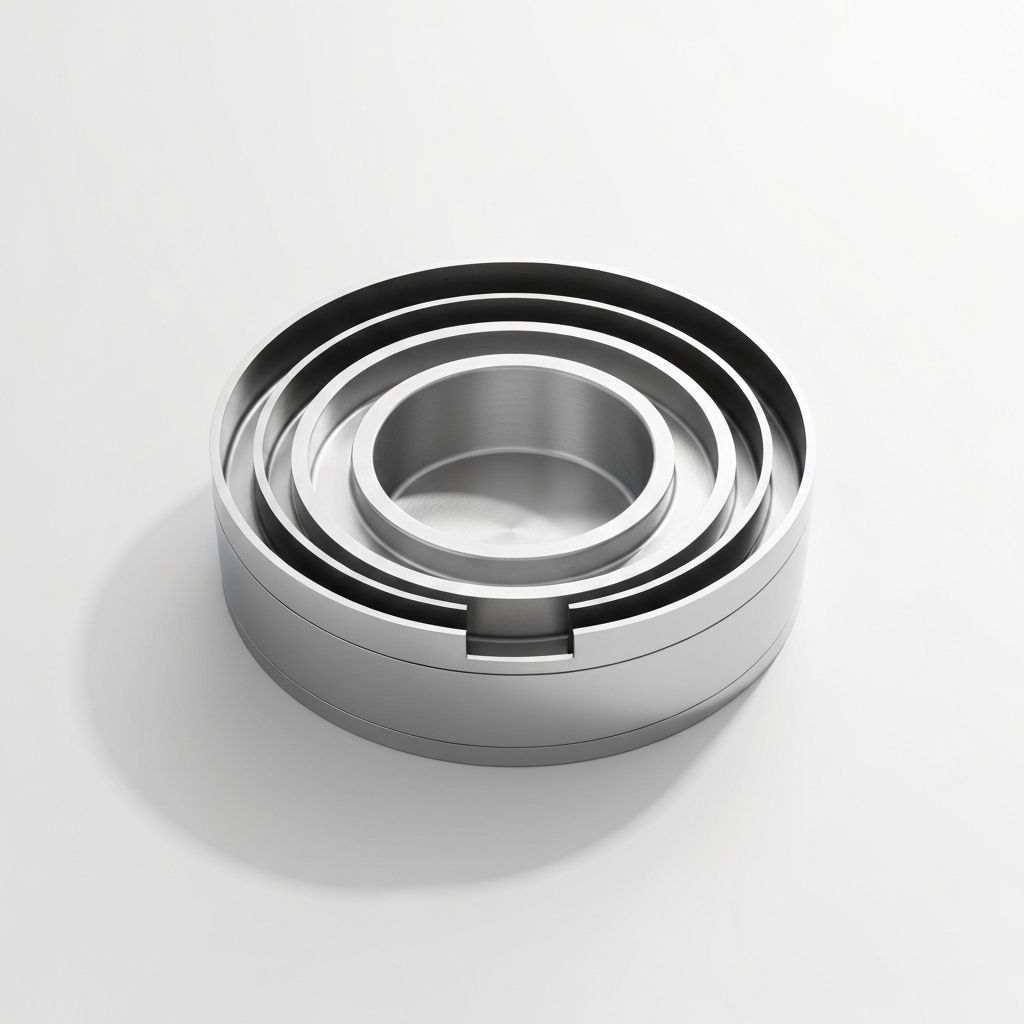
When Williams Sonoma describes a pan as "3-ply" or "5-ply," they are referring to the number of bonded metal layers that make up the pan walls — not just the base. This fully-clad construction is what separates professional cookware from cheap disc-bottom alternatives where only the bottom has a multi-layer core.

Cross-section of 5-ply cookware construction showing bonded metal layers

Fully-clad construction

Layers run continuously from base through walls — not just the bottom disc

Heat Distribution Score by Construction

1-Ply (Bare Steel)
30
3-Ply Tri-Clad
72
5-Ply Penta-Clad
92
Copper Core
98

Illustrative index based on thermal conductivity and wall distribution testing

3-Ply (Tri-Ply)

Layer Construction

18/10 Stainless SteelCooking surface — non-reactive, easy to clean
Aluminum CoreHeat conductor — distributes heat rapidly and evenly
18/0 Stainless SteelExterior — magnetic, induction-compatible

3-ply is the standard construction for professional-grade stainless cookware. The aluminum core rapidly conducts heat from your burner outward through the stainless walls, eliminating hot spots. All-Clad D3 and the entry Thermo-Clad sets use this architecture. For most home cooks, 3-ply represents the sweet spot of performance, weight, and value.

Pros

  • +Lighter weight than 5-ply
  • +Faster heat response
  • +Industry-standard benchmark

Cons

  • Slightly less heat retention than 5-ply
  • Wall heat distribution marginally less even

Best For

Everyday cooking, searing, sautéing, weeknight meals

Shop All-Clad D3 Stainless 10-Piece Set

5-Ply (Penta-Ply)

Layer Construction

18/10 Stainless SteelInterior cooking surface
Aluminum LayerPrimary heat conductor
Stainless Steel CoreStructural rigidity layer
Aluminum LayerSecondary heat conductor
18/0 Stainless SteelInduction-ready magnetic exterior

5-ply construction adds a second aluminum layer and a stainless steel structural core for greater rigidity and more uniform heat in the walls. The All-Clad D5 and Williams Sonoma Thermo-Clad 5-Ply sets use this architecture. The extra layers mean the pan takes slightly longer to heat up but holds temperature more steadily — ideal for slow sauces and gentle braises where precise temperature control matters.

Pros

  • +Superior wall-to-wall heat distribution
  • +Greater structural rigidity — no warping
  • +Better heat retention for long cooking
  • +Premium aesthetic with added heft

Cons

  • Heavier — noticeably so in large skillets
  • Slower initial heat response

Best For

Slow sauces, reduction, braising, precise temperature control

Shop All-Clad D5 Stainless 10-Piece Set

Our Verdict

For most home cooks, 3-ply fully-clad stainless is the right starting point — it delivers professional results at a manageable weight. Upgrade to 5-ply if you cook a lot of slow sauces or braises where wall heat retention makes a noticeable difference. Copper Core is the pinnacle for precision-obsessed cooks who value instant thermal response above all else.

Chapter 3

Brand Head-to-Head

Williams Sonoma curates cookware from the world's finest manufacturers — but each line has a distinct philosophy, construction, and ideal use case. These side-by-side comparisons cut through the marketing language so you can see exactly what you're paying for.

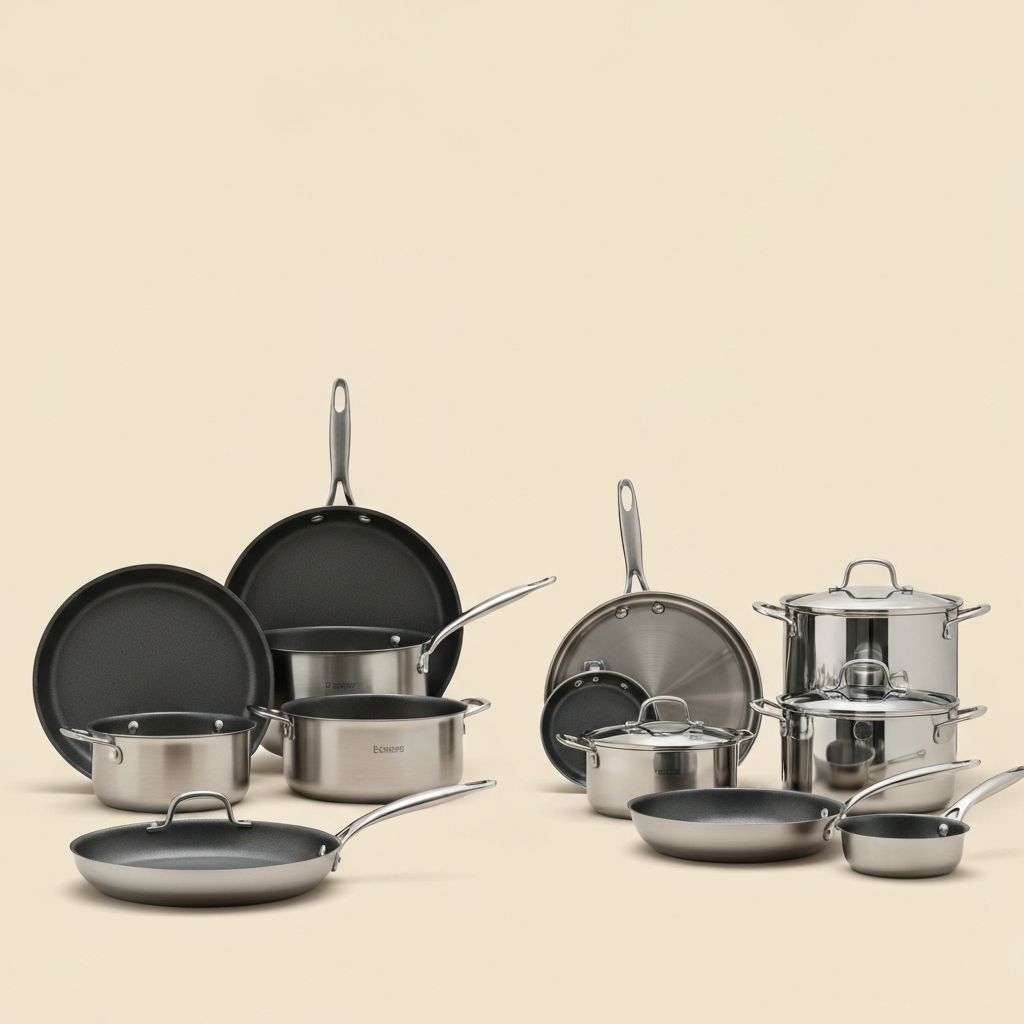
Thermo-Clad and All-Clad cookware sets compared side by side

Left: Williams Sonoma Thermo-Clad (5-ply, Italy). Right: All-Clad D5 (5-ply, USA). Both are outstanding — the differences are in the details.

Thermo-Clad Stainless vs. All-Clad D5

Italy-crafted exclusivity vs. American 5-ply heritage

FeatureThermo-Clad / D3All-Clad D5Copper Core
Construction5-Ply fully-clad, Italy5-Ply fully-clad, USA
Heat DistributionExcellent — thick aluminum coreExcellent — stainless steel core adds rigidity
Weight (12" Skillet)Approx. 2.8 lbs — lighter feelApprox. 3.2 lbs — substantial heft
Handle DesignContoured riveted, stay-cool up to 500°FClassic straight stay-cool stainless
Oven Safe Temp600°F (with lid)600°F
InductionYesYes
Dishwasher SafeYes (hand-wash recommended)Yes (hand-wash recommended)
Best ForValue-conscious professionals, giftingAll-Clad loyalists, long-term investment

Our Verdict

Both sets are outstanding performers that will outlast most home kitchens. The Thermo-Clad edges out the D5 on build exclusivity — you get equivalent 5-ply construction crafted in Italy, exclusive to Williams Sonoma, with a slightly more ergonomic handle. The D5 has the slight edge in name recognition and resale value. Our pick for most buyers: Thermo-Clad.

All-Clad D3 vs. All-Clad D5 vs. Copper Core

Choosing within the All-Clad lineup

FeatureThermo-Clad / D3All-Clad D5Copper Core
ConstructionD3: 3-Ply tri-cladD5: 5-Ply penta-cladCopper Core: 5-Ply with copper layer
Heat Response SpeedFastMediumFastest
Heat RetentionGoodExcellentGood (heats & cools quickly)
WeightLightestMedium-heavyHeaviest
InductionYesYesYes (magnetic base)
Best ForEveryday versatilitySlow cooking, precisionSauce work, precision

Our Verdict

D3 is the workhorse for everyday cooking and the logical first purchase. Step up to D5 if you prioritize steady, even heat for reduction sauces and braises. Choose Copper Core if instant temperature responsiveness is your top priority and budget is not a concern — it is the most technically sophisticated pan in the All-Clad lineup.

Chapter 4

Care & Maintenance

Premium cookware is a multi-decade investment — but only if cared for correctly. The most common reason high-end pans deteriorate prematurely is improper cleaning: the wrong products, the wrong technique, or the wrong temperature. These material-specific protocols will keep your Williams Sonoma cookware looking and performing like new for generations.

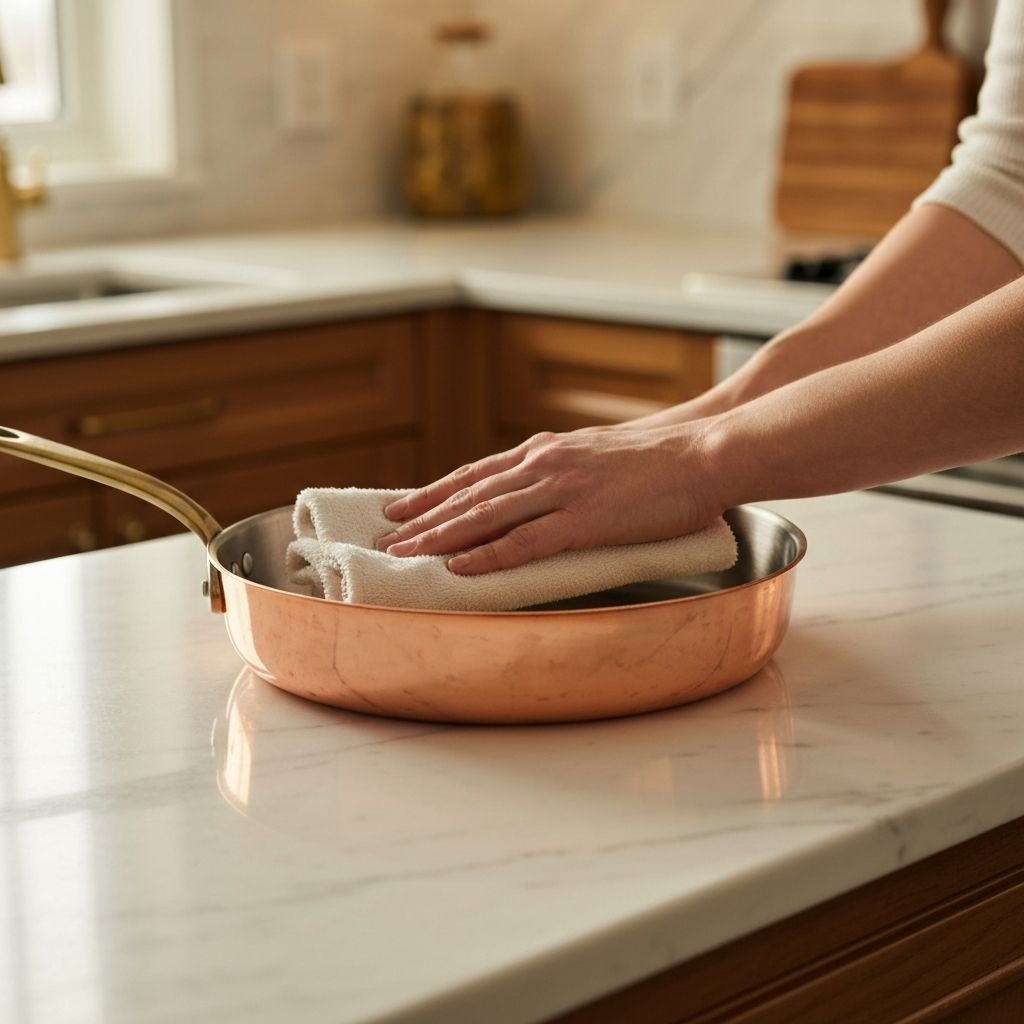
Polishing premium copper cookware to a showroom shine

Stainless Steel

Remove rainbow heat stains

Those iridescent blue and brown heat marks are mineral deposits, not damage. Rub the affected area with a cloth dampened with white vinegar for 30 seconds, then rinse. The discoloration lifts instantly without abrasives.

Treat white mineral spots

Hard water leaves white calcium deposits after boiling. Simmer equal parts water and white vinegar in the pan for 10 minutes, then rinse and dry immediately. Never let stainless air-dry with water sitting in it — this is the primary cause of water spotting.

Polish to showroom condition

Apply a small amount of Bar Keepers Friend paste with a damp cloth in the direction of the grain (always with the grain — never in circles). Rinse thoroughly and dry by hand with a soft microfiber cloth. Your pan will look brand new.

Prevent food from sticking

The most common stainless mistake: adding food to a cold pan. Heat the pan first until a drop of water skitters and evaporates in 2–3 seconds (the Leidenfrost point). Then add oil and let it shimmer before adding food. The pores in the stainless have expanded and closed, creating a temporarily non-reactive surface.

Do

  • Hand-wash with warm soapy water
  • Dry immediately after washing
  • Use Bar Keepers Friend for polishing
  • Store with pan protectors between pieces

Don't

  • Soak overnight — causes water staining
  • Use steel wool — scratches the finish
  • Heat an empty pan on high for prolonged periods
  • Salt cold water — add salt only after boiling

Copper Cookware

Embrace the living patina

Copper develops a rich amber-to-brown patina over time — this is a sign of a well-loved pan, not neglect. Many professional cooks prefer a patinated copper pan because the darkened surface absorbs heat slightly faster than bright copper. The choice to polish is purely aesthetic.

Restore bright polish

Mix equal parts flour, salt, and white vinegar into a thick paste. Apply to the copper exterior, rub gently with a soft cloth, then rinse in warm water. For stubborn tarnish, a commercial copper cleaner like Wright's Copper Cream works in under a minute. Never use abrasive scrubbers on copper — they leave permanent scratches.

Clean the stainless interior

The interior of Williams Sonoma copper pans is lined with stainless steel for durability and non-reactivity. Clean it exactly like stainless — warm water, mild soap, and a soft sponge. Never use acidic cleaners on the interior that could degrade the lining over time.

Storage essentials

Hang copper pans on a pot rack when possible — the airflow prevents condensation-related spotting and shows off their beauty. If stacking, place a soft cloth or silicone pan protector between pieces to prevent the exterior copper from being scratched by harder metals.

Do

  • Polish with natural paste (flour + salt + vinegar)
  • Hand-wash only — never dishwasher
  • Dry immediately and thoroughly
  • Use silicone or wooden utensils on the interior

Don't

  • Use the dishwasher — destroys the copper finish
  • Use abrasive pads or steel wool
  • Use acidic cleaners on the interior lining
  • Overheat — copper responds to medium heat effectively

Enameled Cast Iron (Le Creuset)

Remove stuck-on food

Fill the pot with warm water and a drop of dish soap and let it soak for 15–20 minutes. Do not use harsh metal scrapers on the enamel interior. For stubborn residue, boil a cup of water with a tablespoon of baking soda for 2 minutes — this lifts cooked-on food without any scrubbing.

Eliminate dark stains on the interior

Over time, the light enamel interior of a Dutch oven develops brown staining from browning and braising — this is completely normal and does not affect cooking. To restore a lighter color, fill with water, add a few tablespoons of bleach, and let sit for 2 hours then rinse thoroughly.

Care for the exterior enamel

The exterior colored enamel (like the Forêt green) is more delicate than the interior. Avoid thermal shock — never plunge a hot pan into cold water. Let the pan cool gradually before washing. Minor chips in the exterior enamel are cosmetic only; chips in the interior cooking surface warrant replacement.

Season the raw rim

Le Creuset Dutch ovens have an unfinished raw iron rim at the top lip. Rub this rim lightly with a neutral cooking oil once in a while to prevent it from developing surface rust — particularly important in humid climates.

Do

  • Hand-wash for longevity (dishwasher-safe but fades color)
  • Use wooden or silicone utensils
  • Let cool before washing to avoid thermal shock
  • Store with lid slightly ajar to allow airflow

Don't

  • Use metal utensils that chip the enamel
  • Overheat an empty pot — damages enamel
  • Use cooking sprays — cause difficult staining
  • Stack without protection inside other cast iron

Universal Pro Tip

Regardless of material, the single most damaging habit for any premium cookware is thermal shock — rapidly transitioning from extreme heat to cold water. Always allow your pans to cool to near room temperature before washing. This prevents warping in stainless, enamel cracking in cast iron, and structural weakening in copper. Five extra minutes of cooling time can add years to the life of your investment.